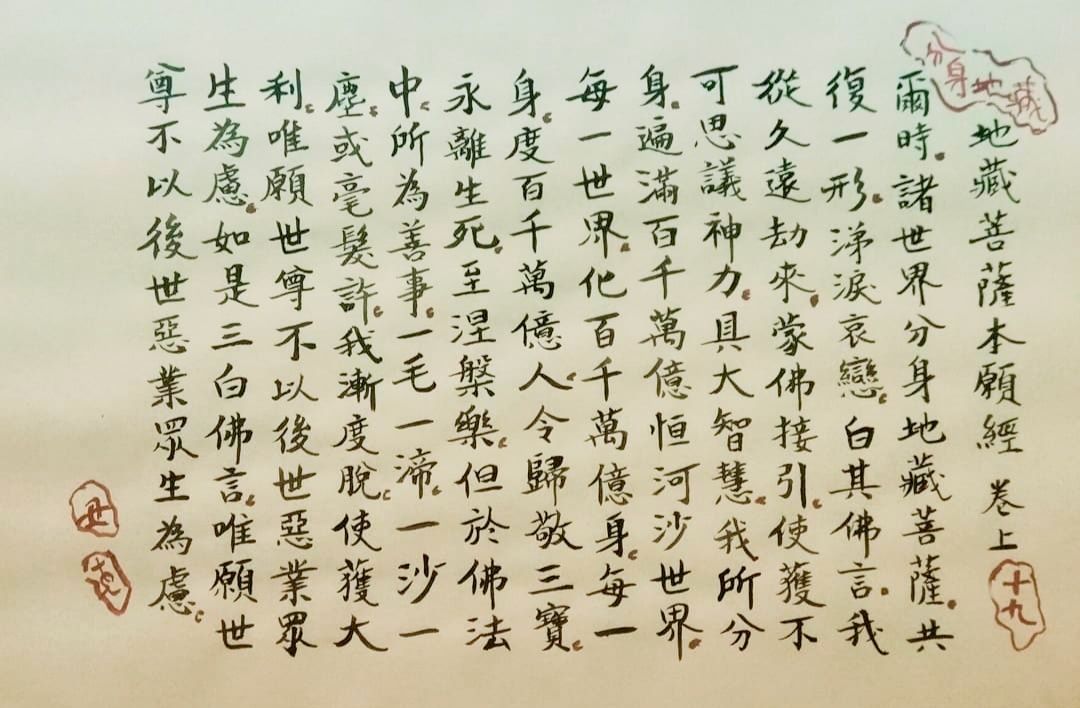
Complete sutra text and vernacular translation of the Ksitigarbha Sutra, Volume 3, covering Chapters 10 through 13. An in-depth exploration of the merits of giving, the Earth Spirit's vow of protection, and the 28 extraordinary benefits of venerating Ksitigarbha Bodhisattva. Through accessible translation, learn to eliminate karmic obstacles and bring peace and well-being to your family.
A complete collection of the Ksitigarbha Sutra, Volume 2, with sutra text and modern translation, covering Chapters 5 through 9. Explore the true nature of the various hells and the karmic causes of suffering, and learn how to deliver deceased loved ones or pray for ailing family members through chanting the Buddha's name and performing meritorious deeds. Written in accessible modern language, this guide teaches you how to accumulate profound merit for your family, helping them leave suffering behind and attain happiness.
Featuring the complete text of the Ksitigarbha Sutra, Volume 1, with easy-to-understand modern Chinese translations, covering Chapters 1 through 4. Discover Ksitigarbha Bodhisattva's magnificent vow — "I will not attain Buddhahood until all hells are empty" — and learn about the dialogues between the Buddha and Bodhisattvas, as well as the true nature of karma and its consequences for all sentient beings. An ideal introductory reading for those seeking deeper understanding of Buddhist teachings.
A deep dive into Neale Donald Walsch's Conversations with God! This book not only redefines suffering and God but also reveals the secret to creating wealth and rewriting your life. It turns out heaven and hell are both on Earth. As long as you believe 100%, you can draw upon the energy of the universe to create the life experience you desire.
2026 is the final clearing period before the great human shift in 2027. This article analyzes the impact of the connection between the Heart Center and the Emotional Center from a Human Design perspective, and offers survival strategies like the "Overnight Decision Method" and "Healthy Selfishness" to help you gracefully navigate a year of change.
Exploring the phenomenon of 'Banality of Evil' in society, and how individuals can cultivate an inner state and outer strategy of 'Awe and Love' to deal with pervasive malice.
When emotional breakdown feels like a burst water pipe, loved ones often offer ineffective advice wrapped in love. This article explores how to identify 'dangerous comfort', understand the 'high-functioning depression' compensation trap, and learn the importance of 'safe companionship' and seeking professional counseling.
Critical period for 2026 identity rebirth: How HSPs pass through the 4D filter and safely align with their new identity in the 5D world. Using decluttering, visualization, and 5-sense strategies to transition gracefully during the collective consciousness upgrade.
Facing the turbulence and chaos of the 2026 Fire Horse Year, the focus is not on predicting good or bad luck, but on establishing an inner filtering system. Through 'intent', practicing 'zero emotional reaction', and a daily 'reset ritual', you too can solve problems calmly in this rollercoaster life and achieve a rebirth.
Maitreya Buddha talks about the game nature of the Earth world and the guide to leaving (enlightenment). How to satisfy the 'Exit Checklist' and graduate elegantly under system pressure?